

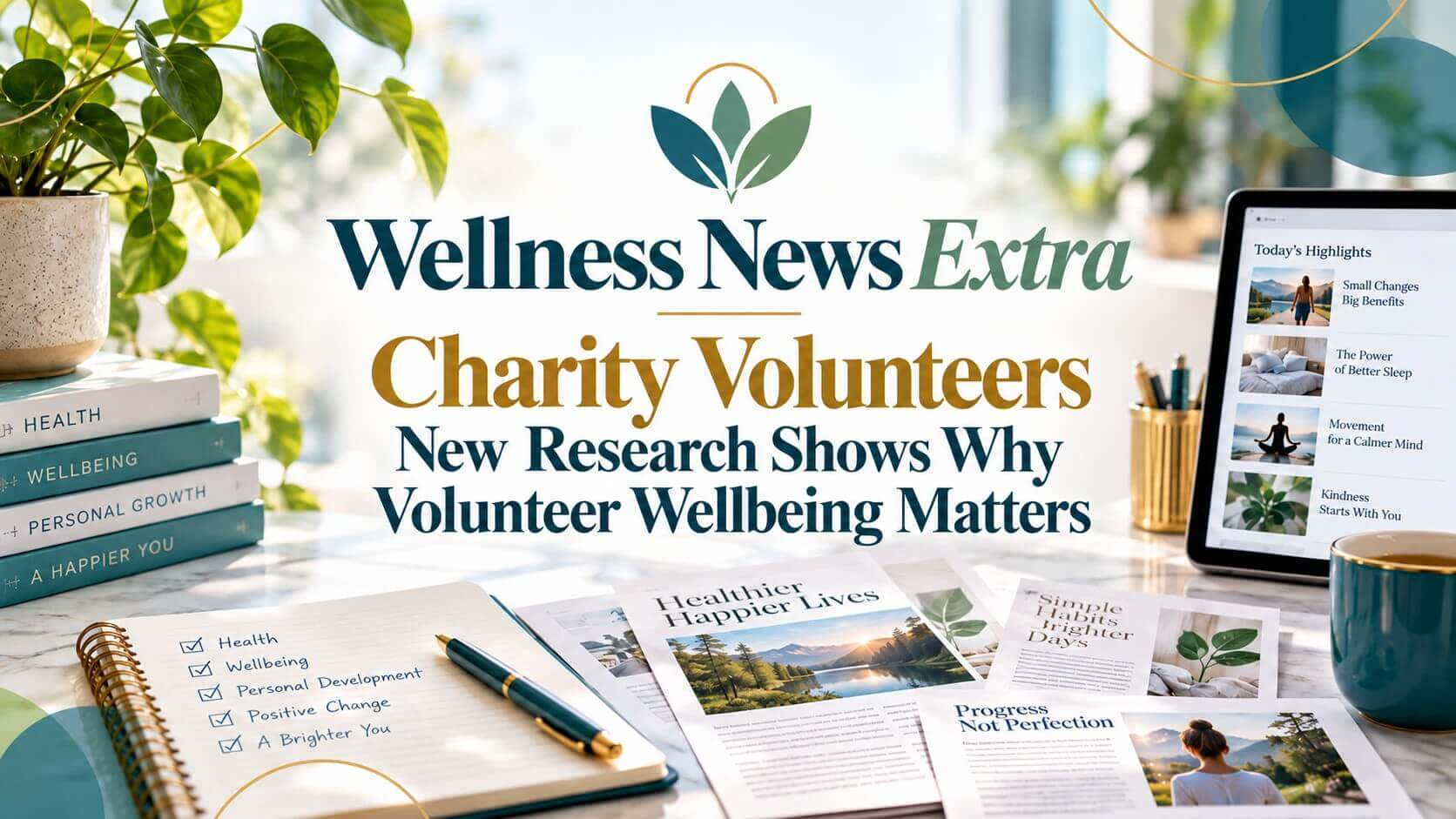
Could Your Volunteers Be Giving More Than You Realise?
A new study of more than 7,000 adults in England has produced a result that should make charity leaders stop and think.
Volunteering is widely associated with purpose, connection and doing something worthwhile.
But the latest research suggests the wellbeing picture may be more complicated than many organisations assume.
That matters because volunteers are often the lifeblood of charities. They give their time, energy and experience to causes they believe in – and many organisations quite reasonably assume that the act of volunteering itself is good for them.
The new evidence suggests we need to look a little deeper.
The finding charities should pay attention to
Researchers analysed data from 7,146 adults in the Taking Part 2019–2020 survey in England.
They examined whether volunteering was linked with:
> happiness
> life satisfaction
> anxiety
> loneliness
> the feeling that life is worthwhile
The clearest positive result was around purpose.
People who volunteered were more likely to say that their lives felt worthwhile.
But once other factors were taken into account, volunteering did not significantly predict greater happiness, higher life satisfaction or lower loneliness. The study also found that volunteers reported slightly higher anxiety levels.
That does not mean volunteering causes anxiety. This was observational research and the researchers themselves caution against drawing that conclusion.
But it does reveal something important:
Feeling useful and feeling well are not necessarily the same thing.
The volunteer who loves helping can still be struggling
This is where the finding becomes particularly relevant to charities.
A volunteer may genuinely enjoy what they do.
They may believe strongly in the cause.
They may feel appreciated and know that their contribution matters.
And at exactly the same time they may be:
stressed, exhausted, lonely, lacking confidence, coping with family pressures or simply struggling to look after themselves.
At Wellness Within Club, this distinction is something we believe is important.
Purpose can support wellbeing – but purpose alone does not provide all the support someone may need.
That is a very different proposition from saying volunteering is unhealthy.
It is saying that we should not confuse commitment with wellbeing.
Volunteering can still bring significant benefits
The wider research is reassuring.
A major umbrella review examining 28 previous systematic reviews found benefits associated with volunteering across mental, physical and social wellbeing.
Among the more consistent findings were benefits relating to purpose, life satisfaction, psychological wellbeing, social connection and physical functioning.
But there is another useful detail buried in that research.
The benefits are not identical for everyone.
Factors including age, the type of volunteering, motivation, feeling appreciated and social support can influence what volunteers experience.
And in emotionally demanding roles, burnout and emotional exhaustion can become genuine issues, particularly where volunteers lack support or effective coping strategies.
That changes the question charities should be asking.
Are we supporting the people doing the supporting?
Most charities naturally concentrate their resources on beneficiaries.
That is where the need is visible.
But volunteers may be the people delivering that support.
Someone could spend several hours helping people experiencing illness, bereavement, loneliness, disability or crisis – and then return home carrying pressures of their own.
The fact that they keep turning up does not necessarily tell us how they are doing.
Neither does the fact that they say the role is worthwhile.
So perhaps volunteer wellbeing should not simply mean:
“Do our volunteers enjoy volunteering?”
A better question may be:
“What support do our volunteers have when life outside their volunteering becomes difficult?”
That question can open several others:
> Do they have somewhere to turn for stress support?
> Are they encouraged to look after their own health?
> Do they have practical tools for confidence, habits or personal goals?
> Does the organisation only notice wellbeing when somebody starts struggling?
Those are potentially useful conversations for trustees, volunteer managers and charity leaders.
Feeling valued matters too
Another finding from the wider research is particularly relevant.
Feeling appreciated was one of the factors associated with stronger wellbeing benefits from volunteering.
That does not necessarily require a large wellbeing budget.
Sometimes the starting point is much smaller:
recognising someone’s contribution, checking in, providing access to useful resources, encouraging breaks, or simply making it clear that looking after themselves is not selfish.
The message becomes:
We value what you give – but we value the person giving it as well.
One finding. A much bigger question
The latest research does not overturn what we know about volunteering.
Volunteering can bring purpose, connection and substantial benefits.
But it does challenge the assumption that those benefits happen automatically.
A volunteer can believe passionately in the work they do while still needing support themselves.
And perhaps that is the most useful lesson from the research.
When so much attention is rightly focused on the people a charity helps, who is looking after the people helping them?
Supporting Volunteer Wellbeing
This is one of the reasons Wellness Within Club has developed V-Well, our wellbeing initiative for charities and volunteers.
It gives organisations a practical way to provide their volunteers with access to wellbeing and personal-development support alongside the valuable work they already do.
Find out about V-Well:
FIND MORE HERE
Register your charity:
CHARITY REGISTER
Keyes, Gradidge, Ryan & Lee (2026) –Volunteering Predicts Mixed Outcomes on Subjective Wellbeing, Behavioral Sciences. The study analysed 7,146 adults from the Taking Part 2019–2020 survey.
Nichol, Wilson, Rodrigues & Haighton – Exploring the Effects of Volunteering on the Social, Mental, and Physical Health and Well-being of Volunteers: An Umbrella Review. The review examined 28 systematic reviews of volunteering and wellbeing.