

Small research insights & news for a healthier, happier you.
Why Feeling Part of Something Matters More Than We Think
New research on belonging, everyday movement and the people who support others — with small things to try this weekend.
Welcome from Nigel
This week, we’re exploring three interesting pieces of research that challenge how we approach everyday wellbeing.
Could just three minutes of exercise help us become more active? Does what we’re grateful for influence how we feel? And why do we keep putting off things we know we need to do?
There’s a common thread running through all three: sometimes the biggest obstacle isn’t knowing what to do – it’s getting started.
And as always, we’ve included a little Weekend Fun to give you something different to try.
Look out for my challenge below – Nigel

Thought from Nigel
“The Black Hole of Stress”
I’ve seen this happen to two close friends, at different times in their lives. Both were work-driven and focused, but each reached a point where they simply couldn’t get up and go to work.
They’d hit a wall – the black hole of stress that gradually draws you in, until you find yourself in a place where getting out feels almost impossible.
Both received medical treatment and support. But recovery also meant taking time away from work, finding activities that helped reduce stress, and re-examining their work–life balance.
How are you supporting yourself, your team or your loved ones to recognise when they need help?
Prevention is better than cure. Learning to recognise stress, manage everyday pressures and look after our wellbeing early can sometimes stop problems becoming more serious.
Our stress-management and lifestyle training in the members’ Wellness area can help you take those positive steps. In some cases, early self-care may reduce the need for professional intervention later. And when professional support is needed, our training can work alongside it, not replace it.
Don’t wait until stress becomes overwhelming before giving your wellbeing the attention it deserves.

Could Feeling Part of Your Community Help You Feel Better?
New UK research links a stronger sense of belonging with less loneliness and better wellbeing.

We often think about wellbeing in terms of what we do individually: getting enough sleep, exercising, eating well or managing stress.
But our relationships with the people and places around us may be just as important.
A 2026 study published in Social Science & Medicine examined two sets of UK data, including a large national study involving more than 38,000 people.
Researchers found that people whose sense of identification with their neighbourhood increased also tended to report improvements in wellbeing. Reduced loneliness appeared to be an important part of that relationship.
This wasn’t simply about knowing lots of people. It was about feeling connected to a community.
What can we take from this?
A sense of belonging doesn’t always come from joining a large group or attending lots of events.
For charities, community groups and workplaces, there’s another question worth asking: do people feel included, or do they simply turn up and carry out their responsibilities?
The research shows an association over time; it doesn’t prove that any single activity will improve everyone’s wellbeing.
“Belonging isn’t simply about being around other people. It’s about feeling that you’re part of something.”
Try this weekend:
Think of one place where you regularly see the same people. This weekend, make one small effort to strengthen that connection — perhaps start a conversation, thank someone or take part in a local activity.
What to look for: Did you discover something new? Did the conversation feel warmer or more natural than usual?
What next? If it felt worthwhile, make a point of continuing that connection next time you meet. If it felt awkward, don’t force it; try a smaller gesture such as a greeting or a genuine thank-you. The aim is to develop connection gradually, not achieve an instant result.

What Happens to Your Muscles After 25 Minutes of Sitting?
Researchers have found that muscle activity can fall considerably during longer periods of sitting.
Whether we’re watching television, reading, travelling or working at a computer, it’s surprisingly easy to remain seated for long periods.
New research published in npj Exercise Medicine and Health examined more than 7,600 periods of sitting involving 84 adults.
Using specially designed clothing that measured muscle activity, the researchers found that activity in the thigh muscles generally declined the longer people remained seated. By around 25 minutes, detectable activity had fallen to very low levels.
The researchers also observed that people who interrupted sitting with more frequent or more active movement tended to show more muscle activity.
What can we take from this?
You don’t necessarily need a formal exercise session to introduce more movement into your day.
Walking to another room, standing up to do a small task or taking a short stroll can interrupt a long sitting period.
The study measured muscle activity; it did not establish that sitting for 26 minutes causes harm or that a particular break prevents disease.
“You don’t have to turn every break into a workout. Sometimes the useful change is simply to stop sitting for a few minutes.”
Try this:
During one long sitting activity this weekend, get up and move around briefly after about 25–30 minutes. Notice whether it also helps you feel more alert or comfortable.
What to look for: When you sit down again, do you feel more comfortable, alert or less stiff? Or does it make little noticeable difference?
What next? If you feel better, try repeating the break during other long sitting periods. If you notice no immediate change, you can still experiment with regular, comfortable movement breaks; a lack of immediate sensation doesn’t mean movement has no value.
The 25–30 minutes is a practical experiment, not a proven universal threshold.

Who Supports the People Who Spend Their Days Supporting Others?
New charity-sector findings raise questions about emotional pressure and access to workplace support.
People working in charities often support others through difficult circumstances.
That might mean listening to someone in distress, helping a family in crisis, dealing with uncertainty or supporting people facing significant personal challenges.
Research reported by the Association of Charitable Organisations and Rightsteps found substantial emotional strain among respondents working in frontline charity roles.
In the survey, 84% reported at least one work-related wellbeing symptom, while 83% said they encountered challenging interactions with distressed people at least occasionally.
These findings relate to survey respondents, not necessarily every charity worker or volunteer in the UK.
What can we take from this?
Meaningful work can also be demanding work.
Having a worthwhile purpose doesn’t remove the need for practical support, clear boundaries, manageable workloads and opportunities to talk about difficult experiences.
For charity leaders and managers, the important question isn’t simply whether wellbeing resources exist. It’s whether people know about them, feel comfortable using them and find them genuinely helpful.
We’ll explore this issue in greater depth in a separate charity-focused feature.
“People who spend their time supporting others need support themselves — and meaningful work doesn’t remove that need.”
Try this:
If you manage, coordinate or support other people, think about someone who may be carrying considerable responsibility.
Ask them: “What’s one thing that would make your role easier or better supported?”
Listen carefully, without immediately explaining why something might be difficult to change.
What to look for: Is their concern about workload, confidence, communication, emotional pressure or access to resources?
What next? Agree one realistic follow-up action, even if it’s simply arranging a longer conversation or checking an available resource. If the issue requires organisational change, record it and raise it with someone who can act.
The important part is following through. Asking people what they need and then doing nothing can undermine trust.

Weekend Fun
A few feel-good extras to round off your read

Challenge Yourself This Weekend
The Two-Minute Appreciation Challenge
Thank someone for something specific they’ve done. Notice their response and consider whether making appreciation more regular could improve your everyday relationships.
That gives readers a second activity rather than repeating the same one.

Something to Make You Smile
Here’s a small weekend observation:
We can spend hours connecting devices to the internet, yet sometimes forget to connect with the person sitting next to us.
Perhaps the simplest connection this weekend doesn’t need Wi-Fi!

Need Help Putting Plans Into Action?
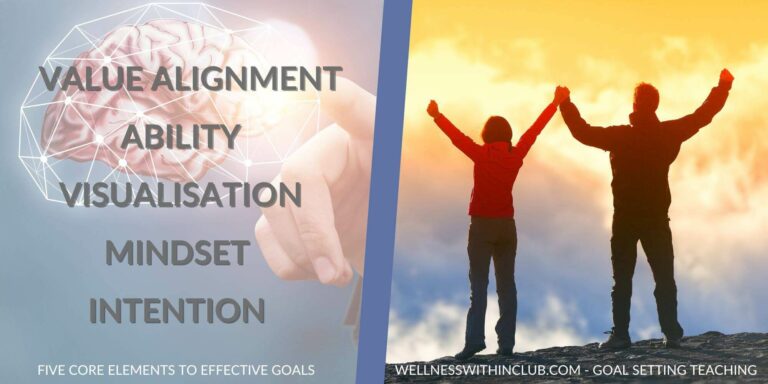
Knowing what to do is often the easy part.
Actually doing it – and keeping going – is where most plans fall apart.
Inside Wellness Within Club you’ll find practical exercises, templates, guided challenges and training to help turn good intentions into action.
Try the Club free and explore what works for you.
P.S. The answer to the Challenge is B – slow jogging